Making Friends in Spain: The Spanish You Actually Need

Everyone tells you Spain is warm, social, open. And it is — once you're in. Getting there as an expat is a different story. You show up, your Spanish is functional enough for the supermarket and the pharmacy, but somehow the gap between ordering a coffee and having an actual conversation feels enormous. The friendships you imagined haven't materialised. This isn't because Spaniards aren't friendly. It's because making friends in any language requires a different register — one that nobody teaches you in class.
Here's the Spanish that actually opens doors.
Why Textbook Spanish Keeps You at Arm's Length
Standard language courses teach you to be polite and correct. But Spanish social life doesn't run on politeness — it runs on warmth, humour, and a kind of casual directness that can feel rude until you understand it's actually an invitation.
When a Spanish colleague says "¿Qué haces este finde?" (What are you doing this weekend?) with zero preamble, that's not abrupt — it's an opening. Responding with "Mmm, no lo sé todavía" (Hmm, I'm not sure yet) and leaving it there kills the moment. The move is to answer and bounce it back: "No sé, ¿y tú?" or better yet, "Nada especial — ¿me estás invitando a algo?" (Nothing special — are you inviting me to something?).
Banter matters. Knowing how to use it changes everything.
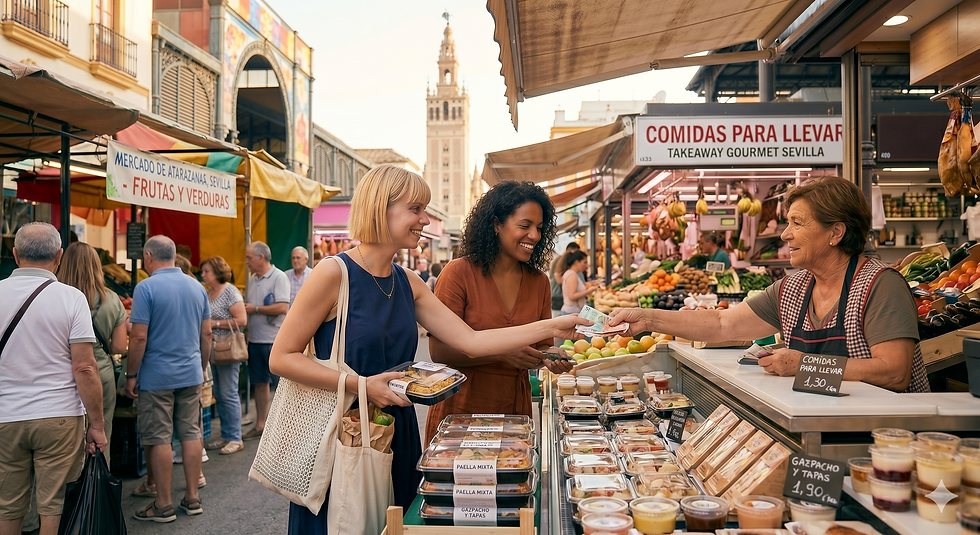
The Phrases That Actually Start Friendships
Forget formal introductions. Spanish social bonds form through shared complaints, shared plans, and shared laughter. These phrases do the work:
¡Qué calor hace, ¿no?! — Classic opener — weather, traffic, the queue at the bank. Universal.
¿Llevas mucho tiempo viviendo aquí? — How long have you lived here? — great for connecting with locals and other expats alike.
¿Me recomiendas algún sitio por aquí? — Do you recommend anywhere around here? — asks for local knowledge, which people love giving.
¡Tenemos que quedar algún día! — We should meet up sometime! — said often, but if YOU say it and follow through, you stand out.
¿Quedamos el finde? — Shall we meet up this weekend? — direct, warm, works perfectly once you've had one good conversation.
Me alegro de haberte conocido — Nice to meet you — but said at the end of a real conversation, it lands differently than a formal goodbye.
The trick with all of these is following up. Spaniards talk about quedar (meeting up) constantly. The ones who actually text the next day are the ones who make real friends.
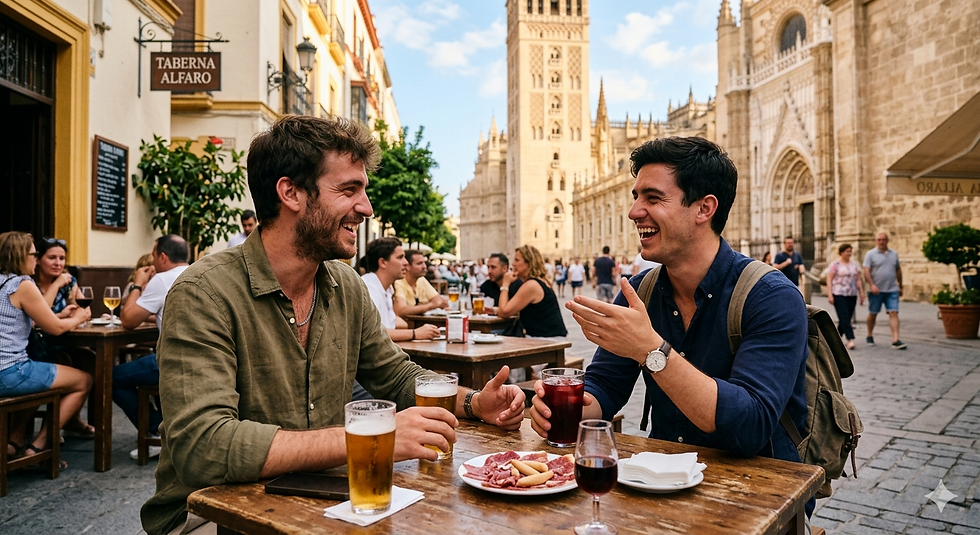
Where Friendships Actually Form in Spain
Knowing the right phrases is only half of it. You also need to be in the right places — and Spain's social geography is different from what most expats are used to.
The bar is the living room. In the UK or the US, you might invite someone to your home after a few months of friendship. In Spain, the bar is where friendship forms. Saying "¿Te apetece tomar algo?" (Do you fancy grabbing something?) is a perfectly natural invitation after a five-minute conversation. Don't wait until you know someone well — the point is to get to know them over a caña.
Neighbourhood life is real. La vecina (the neighbour), the guy at the panadería (bakery), the parents at school pick-up — these are genuine social entry points. "Buenos días" every day, a "¿Qué tal?" that goes beyond one word — these build quiet familiarity that can turn into something more. Carmen, who's lived and worked in Seville for years, always tells her students: the neighbourhood is your social network. Invest in it.
Activities and classes give you structure. Language exchange groups, padel clubs, neighbourhood associations (asociaciones de vecinos), volunteering — these give you repeated contact with the same people, which is how friendship actually builds. Look for "grupos de senderismo" (hiking groups), "clases de cocina" (cooking classes), or local "mercadillos" (markets) where you can become a regular face.

Handling the Moments That Feel Awkward
A few situations trip up expats regularly:
The two-kiss greeting (los dos besos) — It happens fast and it's not optional. Lean in, right cheek first. Hesitating makes it more awkward, not less.
Being invited to a cena (dinner) at 10pm — This is normal. Show up, don't eat beforehand, and plan to stay late. Leaving early is the social faux pas, not arriving at 10.
Group chats moving fast in Spanish — Read before you reply. Jumping in with a joke that lands is better than a polite comment nobody reacts to. "Jajaja" and a relevant emoji are genuinely acceptable responses.
"Ya quedamos" (We'll meet up) — Often said as a social nicety with no specific intent. Don't be discouraged. If YOU want it to happen, YOU text with a concrete plan.
None of this is about faking it. It's about understanding the social code so you can show up as yourself — just in Spanish.
Making friends in Spain takes longer than most expats expect. The language barrier is real, but the cultural gap — knowing when to be direct, when to laugh, when to follow up — is often bigger. The good news is that both are learnable, and neither requires perfection. You just need enough to get started and the confidence to keep going. Want to stop freezing in conversations and actually connect with people in Spain? Book a free 20-minute trial with Carmen and start speaking the Spanish that matters.


Comments